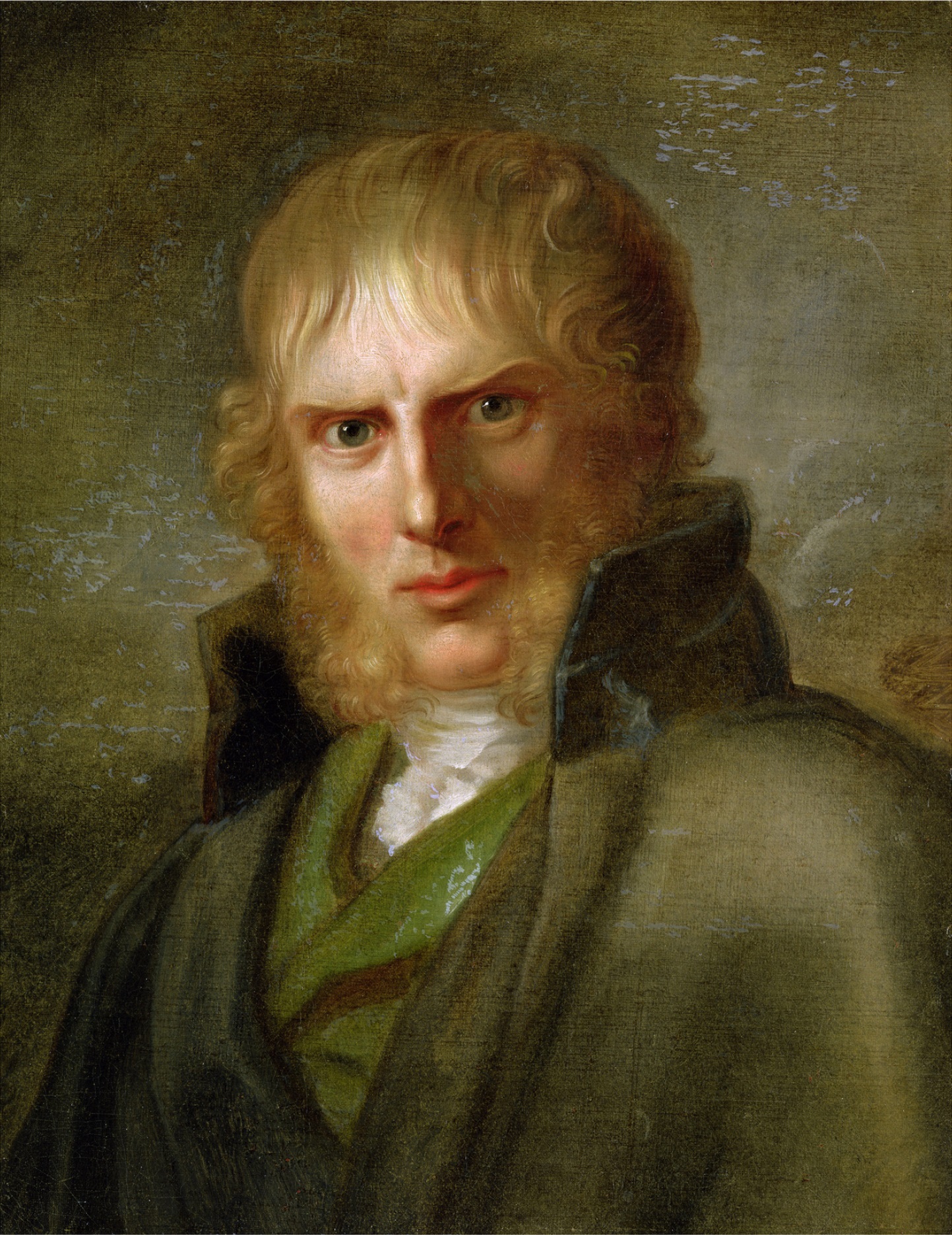
Showing posts with label theology. Show all posts

Thursday, May 3, 2012

Rescuing Human Rights from Human Beings

"La Scapagliata," by Leonardo da Vinci, ca. 1500
The whole civilized world takes the notion of "human rights" for granted. Ask an American if he or she has rights and a doctor's hammer below the knee couldn't provoke such an instant and reflexive response. “Of course I have rights!” (Why would you even ask?) Probe a little bit deeper and ask one of those obnoxious "why" questions and you may possibly get "It's in the Constitution." Pursue it further and ask if it would be okay if a Constitutional amendment took away a right like the freedom of speech. You'll either get stony silence or, if this pedestrian is unusually clever (or unusually good at parroting his professors), an appeal to "humanity." People have human rights because they're human beings. It's circular, of course, but, then, didn't Plato believe that the circle was the most perfect of shapes?

Fantastic as it sounds, we're supposed to believe that this rights-by-virtue-of-humanity argument is sufficient.The only problem with it is that an individual who is the sole owner of his rights (as opposed to being “endowed” with his rights) can forever give them away if he or she so chooses – and if history is any guide, he or she often so chooses. Rights that can be given away at whim are, in reality, no rights at all. The government may as well have absolute jurisdiction if it only refuses to infringe on its citizens’ rights when it’s convenient. An even more fundamental problem with basing rights in humanity itself is our era’s postmodernism. You’re telling me there’s no such thing as absolute right and wrong, but an African tribesman still has an absolute right to food, water and condoms? The absurdity is self-evident and goes a long way in explaining why nothing akin to individual rights was ever recognized until the coming of Christianity, and has receded whenever and wherever the tides of the Gospel have ebbed.

One would think this would be obvious to anyone who bothered to take the most cursory glance at the historical record. Even ancient Greece and Rome, where conceptions of humanistic individualism reached their zenith, had no such concept as individual rights. Plato spoke of the importance of the polis as the source of a kind of communitarian right. Romans emphasized the freedom granted by a just legal system. One searches ancient laws in vain for anything resembling our modern versions of individual rights. Slavery was never prohibited anywhere in the ancient world; in fact, it served as the fundamental basis of those societies. Plato and Aristotle both believed that certain people were meant to be slaves by their very nature. The rest of the world was even worse. Most non-Western languages don't even have a word for freedom.

Only with the coming of Christianity did people begin to recognize that all of mankind is made in the imago dei – the image of God—and therefore deserving of certain rights. In the words of the Apostle Paul in Colossians 3, “there is no Gentile or Jew…barbarian, Scythian, slave or free, but Christ is all, and is in all.” Christians in early Rome shocked their pagan rulers by adopting the children Romans left out in the elements to die. Over the centuries, Christianity persistently eroded the philosophical underpinnings that had allowed slavery to survive. Significantly, the first widespread movement against the slave trade began, not under the auspices of Platonists, but under a Christian queen of France, Bathilda. Charlemagne was opposed to slavery; Pope Callistus himself had been a slave. Abogard, Anselm and Wulfstan and other luminaries of the medieval church all campaigned against the existence of the institution. As Rodney Stark has written, “The theological conclusion that slavery is sinful has been unique to Christianity.”

The Protestant Reformation’s rediscovery of the believer’s direct relationship to God launched a whole new inquiry into individual rights, particularly vis a vis government. If an individual is justified by his or her faith and not by physically going through a sacrament, the logic went, then no person can force salvation on another. This led to the formal enumeration of the right of conscience, and by logical extension, the rights of speech and the press, where conscience was expressed, challenged and forged. Religious thinkers like the Protestant theologian Hugo Grotius applied the principles of Christianity when theorizing about international law. Regardless of culture, government or race, people everywhere possessed certain rights because they possessed a common Creator. In the 17th century, John Locke’s theory of government went so far as to assert that political bodies are instituted for the express purpose of protecting the God-given rights of individuals. From here it was a short step to the Declaration of Independence. The distinctly Christian idea of human rights now also became a part of civic religion, with all the mixed blessings that entailed.

All our modern ideas on this subject can therefore be traced back to Christian theology, which alone has birthed, and can alone sustain, so sweeping an idea as the dignity of the entire human race. It’s all too easy to view this Christian accomplishment in a vacuum, as many American do today. Most people have never considered that humanitarianism, foreign aid, abolition and systematic resistance to tyranny have only ever existed in countries touched by Christianity. As Christianity fizzles out in this country, we should expect to see our ideas of human rights—already so twisted, mutable and vacuous that we call abortion a fundamental right—die out, too.

Friday, April 6, 2012

The Punishment that Brought Us Peace


"Descent from the Cross," by Roger Van Der Weyden, 1435:


"Christ Carrying the Cross," by Hieronymous Bosch, 1490:


"Head of Christ," Albrecht Durer, 1503:


"Christ on the Cross," Albrecht Durer, 1505:


"Crucifixion," by Matthias Grunewald, 1515:


"Christ on the Cross with Mary and John," by Albrecht Altdorfer,1515:


"Descent from the Cross," by Rembrandt, 1634:


"Cross in the Mountains," by Caspar David Friedrich, 1808:


"Morning in the Great Mountains," by Caspar David Friedrich,1810-11:


Friday, March 30, 2012

The Myth of Self-Conscious Tyranny


Watercolor by William Blake, ca. 1795
"And Caiaphas was in his own mind/A benefactor to mankind."      --William Blake, "The Everlasting Gospel"

When most of us think of Hitler, Stalin or Ahmadinejad, we think of a creature who’s fallen so low that he’s become a separation – or, at best, an aberration- from the human race – someone whom we’re not like and could never possibly become.  Like the superstitious, medieval peasant, we see a beast descended from the demonic line of Cain rather than a fellow human being.

But what do we know of the author of evil himself – of Satan? Wasn’t his name once “Lucifer” (which means “light-bearer”)? Wasn’t he the mightiest, most beautiful and most virtuous of the Almighty God’s angels? Wasn’t he presumably exalted above all the others for his righteousness? Here’s what the Bible says:

Ezekiel 28:17:  “Your heart was proud because of your beauty; you corrupted your wisdom for the sake of your splendor. I cast you to the ground; I exposed you before kings, to feast their eyes on you.”

Isaiah 14:12-15: 
“How you are fallen from heaven,
O Day Star, son of Dawn!
How you are cut down to the ground,
you who laid the nations low!
You said in your heart,
‘I will ascend to heaven;
above the stars of God
I will set my throne on high;
I will sit on the mount of assembly
in the far reaches of the north;
I will ascend above the heights of the clouds;
I will make myself like the Most High.’
But you are brought down to Sheol,
to the far reaches of the pit.”

Evil often begins with the pride that comes from doing what’s right. Although we don’t know what exactly it was that Lucifer did that earned him so exalted a position, it was obviously something very good and deserving of reward. When any of us do evil, it’s often not conscious. It begins with a good purpose - like Hitler’s sincere desire to rescue Germany from inflation and foreign dominance, Stalin’s to usher in an egalitarian order, or Ahmadinejad’s to secure Iran from outside aggression – that becomes prideful. Pride then blinds the individual to their selfishness. As they pursue their  noble goal with increasing self-aggrandizement and wickedness -with an increasing philosophy of the ends justifying the means - they tell themselves that it’s for “the public good,” and that makes it okay. This is critical to understand: most egregiously evil individuals honestly believe that they’re doing what’s right.

John Milton’s classic work Paradise Lost brilliantly captures this truth about the nature of evil. Milton portrays Lucifer’s fall as beginning with pride that leads to righteous indignation against a God whom he begins to believe is a tyrant.

"My sentence is for open War; Of Wiles,
More unexpert, I boast not: them let those
Contrive who need, or when they need, not now.
For while they sit contriving, shall the rest,
Millions that stand in Arms, and longing wait
The Signal to ascend, sit ling'ring here,
Heav'n's fugitives, and for their dwelling place
Accept this dark opprobrious Den of shame,
The Prison of his Tyranny who Reigns
By our delay? no, let us rather choose,
Arm'd with Hell flames and fury all at once
O'er Heaven's high Tow'rs to force resistless way,
Turning our Tortures into horrid Arms
Against the Torturer."

--Satan in Paradise Lost, Bk. II

Although this is extra-scriptural, it seems to me to be an accurate depiction of evil. God is seen as "the Torturer," "the Tyrant," and rebelling against him becomes a good, a noble, a laudable act. This is borne out by scripture: Isn't the essence of Adam and Eve's rebellion that the serpent convinced them that God was selfishly holding them back from their full potential? When Milton describes the angelic rebellion Lucifer leads, he portrays it as a kind of democratic revolution against a perceived dictator. Satan and the demons were, indeed, acting from the most base and selfish motives – but they thought they were in the right. Also along these lines is J.R.R. Tolkien’s tale of the king of Numenor who is so seduced and brainwashed by Sauron (Middle-Earth's Satan figure) that he leads his imperial fleet to Valinor (the land of the gods) to wage ware against the perceived injustices of the gods. 

There is a lesson here for all of us.  Whenever we hear that “Obama wants to destroy the country” or “The Christian Right wants to kill homosexuals” or “Ahmadinejad is a madman,”  we should remind ourselves that, tragically, whatever we think of these people, it's quite likely they believe that they’re doing what’s right – even that God is on their side. That’s what makes evil so insidious. The greatest evils are perpetrated when we believe that we can do no wrong. And that’s why we should cringe when people act like they could never become a Hitler or a Stalin. That attitude is the beginning that led to the infamy those two men obtained. Our attitude should rather be “There but for the grace of God go I.”


(Entire nations, too, can fall victim to the blinding effects of pride. Read this article to see how)

Thursday, October 20, 2011

The Language of Creation

"Caspar David Friedrich in his Studio,"
Georg Friedrich Kersting, 1819
Christmas Day, 1807. The Count of Thun and his family fought blustery winds on their way to their private chapel at Tetschen castle, Bohemia. This year's religious pageantry was made all the more spectacular by a new addition to the sanctuary. There, in place of the old, ponderous altar-piece stood a newly-finished masterwork. A glinting frame enrounded a painting of Calvary reimagined in an Alpine setting, craggy and crowned by firs. The cross itself stood silhouetted by the brilliant pink hues of a setting sun. This was The Cross on the Mountains, the first major work in what was to be the long and brilliant career of German painter Caspar David Friedrich.

This painting was not just an expression of faith, it was a way for the Thun family to show a cosmopolitan streak. Friedrich’s work was part of a fashionable new movement that was attempting to wash the Enlightenment out of Western Europe. The previous century's overreaching search for rational truth had left the earth a barren wasteland through its insatiable desire to force all knowledge inside of men’s heads. Mysteries and miracles that didn’t conform to formulas had been rejected. For the first time in centuries, Christianity had been publicly attacked. The artists in this new school styled themselves “romantics.” By depicting the inexplicable, the beautiful, and most of all, nature in its glory, they sought to free men from bondage to their minds. Others, chief among them Caspar David Friedrich, painted to remind men that it was not just truth that could be found throughout all of creation, but the truth of the Christian God.

The Cross on the Mountains drew its most vehement criticism, not from Deistic intellectuals, but from a most unlikely source: a fellow Christian. That Christian was the aptly named Basilius von Ramdohr. Unlike Friedrich, von Ramdohr was born and bred among the upper classes of German society. He had acquired a reputation as a conservative lawyer and defender of traditional German values, which led to a career as a cultural critic. With a hint of contempt, no doubt, von Ramdohr went to see Friedrich’s much talked about "romantic" piece when it was on special display. He was deeply unsettled by the painting, so much so, in fact, that he wrote a painstakingly long refutation of the ideas he saw represented in it. He objected that the pine trees had been illustrated to the point of painting each needle. The way the light was rendered was against “all the rules of optics.” And what of landscape paintings themselves? Surely nature itself can contain no explicit meaning and is improper in a church. The rock was rendered poorly, a “most strident contrast to the bright sky, without any transition or harmony.” Perhaps worst of all, in von Ramdohr's opinion, the cross was not located in the center of the painting, and Jesus was not facing the viewer – and surely this would convey the wrong message to worshipers..

With his fledgling reputation at stake, Friedrich was forced to respond. His answer? “Jesus Christ, nailed to the tree, is turned here towards the sinking sun, the image of the eternal, life-giving father. With Jesus’ teachings, an old world dies – that time when God the Father moved directly on the earth. This sun sank and the earth was not able to grasp the departing light any longer. There shines forth in the gold of the evening light the purest, noble metal of the Savior’s figure on the cross, which thus reflects the earth in a softened glow. The cross stands erect on a rock, unshakeably firm like our faith in Jesus Christ. The firs stand around the cross, evergreen, enduring through all ages, like the hopes of man in Him, the crucified.”

Unfortunately, it is very easy for us Christians to make the same mistake von Ramdohr did. In our very desire to keep the Gospel pure, it is tempting to keep our artists in the shadows. We are prone to confusing convention with the Gospel; to thinking that a change in style means a change in substance. Can God only speak through us when we make sure that two pieces of wood are at the exact center of our painting like von Ramdohr wanted? The Bible tells us that God can speak through donkeys, rocks, burning bushes and David’s harp-playing. We forget that though symbols may change, Christ himself can still remain at the center of the work. The greatest stories of salvation are usually told, not through hackneyed altar-calls, but through metaphors. Jesus’ parables are prime examples of this. And what is nature but a majestic metaphor? By depicting Creation in a way that's good and beautiful (Philippians 4:8), we can challenge peoples' deepest beliefs. A God who's evident through the physical world challenges today's naturalists in a way they can't respond to. On the other hand, to deny nature’s revelation of God like von Ramdohr did is to deny what God called “good.” Like the Apostle Paul before his conversion, this man was an intellectual who thought he was advancing the kingdom of God by purging it of false revelation. It turned out that what they were both calling false was God's voice. What place do landscape paintings have in church? Friedrich showed in his response what the psalmist declared long before in chapter 19: "The heavens declare the glory of the Lord; the skies proclaim the work of his hands. Day after day they pour forth speech; night after night they reveal knowledge."

Friday, May 27, 2011

From The Confessions of St. Augustine, Book II: Sin a Counterfeit of God

 "For so doth pride imitate exaltedness; whereas Thou alone art God exalted over all. Ambition, what seeks it, but honours and glory? whereas Thou alone art to be honoured above all, and glorious for evermore. The cruelty of the great would fain be feared; but who is to be feared but God alone, out of whose power what can be wrested or withdrawn? when, or where, or whither, or by whom? The tendernesses of the wanton would fain be counted love: yet is nothing more tender than Thy charity; nor is aught loved more healthfully than that Thy truth, bright and beautiful above all. Curiosity makes semblance of a desire of knowledge; whereas Thou supremely knowest all. Yea, ignorance and foolishness itself is cloaked under the name of simplicity and uninjuriousness; because nothing is found more single than Thee: and what less injurious, since they are his own works which injure the sinner? Yea, sloth would fain be at rest; but what stable rest besides the Lord? Luxury affects to be called plenty and abundance; but Thou art the fulness and never-failing plenteousness of incorruptible pleasures. Prodigality presents a shadow of liberality: but Thou art the most overflowing Giver of all good. Covetousness would possess many things; and Thou possessest all things. Envy disputes for excellency: what more excellent than Thou? Anger seeks revenge: who revenges more justly than Thou? Fear startles at things unwonted and sudden, which endangers things beloved, and takes forethought for their safety; but to Thee what unwonted or sudden, or who separateth from Thee what Thou lovest? Or where but with Thee is unshaken safety? Grief pines away for things lost, the delight of its desires; because it would have nothing taken from it, as nothing can from Thee.

"Thus doth the soul commit fornication, when she turns from Thee, seeking without Thee, what she findeth not pure and untainted, till she returns to Thee. Thus all pervertedly imitate Thee, who remove far from Thee, and lift themselves up against Thee. But even by thus imitating Thee, they imply Thee to be the Creator of all nature; whence there is no place whither altogether to retire from Thee. What then did I love in that theft? and wherein did I even corruptly and pervertedly imitate my Lord? Did I wish even by stealth to do contrary to Thy law, because by power I could not, so that being a prisoner, I might mimic a maimed liberty by doing with impunity things unpermitted me, a darkened likeness of Thy Omnipotency? Behold, Thy servant, fleeing from his Lord, and obtaining a shadow. O rottenness, O monstrousness of life, and depth of death! could I like what I might not, only because I might not? For so doth pride imitate exaltedness; whereas Thou alone art God exalted over all. Ambition, what seeks it, but honours and glory? whereas Thou alone art to be honoured above all, and glorious for evermore. The cruelty of the great would fain be feared; but who is to be feared but God alone, out of whose power what can be wrested or withdrawn? when, or where, or whither, or by whom? The tendernesses of the wanton would fain be counted love: yet is nothing more tender than Thy charity; nor is aught loved more healthfully than that Thy truth, bright and beautiful above all. Curiosity makes semblance of a desire of knowledge; whereas Thou supremely knowest all. Yea, ignorance and foolishness itself is cloaked under the name of simplicity and uninjuriousness; because nothing is found more single than Thee: and what less injurious, since they are his own works which injure the sinner? Yea, sloth would fain be at rest; but what stable rest besides the Lord? Luxury affects to be called plenty and abundance; but Thou art the fulness and never-failing plenteousness of incorruptible pleasures. Prodigality presents a shadow of liberality: but Thou art the most overflowing Giver of all good. Covetousness would possess many things; and Thou possessest all things. Envy disputes for excellency: what more excellent than Thou? Anger seeks revenge: who revenges more justly than Thou? Fear startles at things unwonted and sudden, which endangers things beloved, and takes forethought for their safety; but to Thee what unwonted or sudden, or who separateth from Thee what Thou lovest? Or where but with Thee is unshaken safety? Grief pines away for things lost, the delight of its desires; because it would have nothing taken from it, as nothing can from Thee."   

Monday, May 2, 2011

The Measure of All Things

Human beings have a rare talent for abusing power. For millenia, we've bound ourselves by oaths to protect ourselves and others from our own avarice for just this reason. The oaths follow a common formula. Usually a deity is called upon as a witness and becomes the rule against which the oath-taker's actions and intentions are to be judged by his fellow men. If the promises made are kept, blessings are expected; if the terms are violated, curses divine and human will follow. Either way, justice is done so that life and well-being are secured.

These oaths aren't just for officeholders or magistrates, but for any human being who finds himself faced with the gravity of holding the life or death of another in his hands. Hippocrates of Cos, the ancient Greek physician and “father of medicine”, was in just such a position. Strongly pro-life, his famous “Hippocratic Oath” contains the line “...I will not give to a woman an abortive remedy.” Because of its harmony with Biblical views on the sanctity of life, this oath was administered unaltered by many western medical colleges until the late twentieth century, when such an antiquated line was tossed aside in favor of feeble advice such as “...tread with care in matters of life and death.” Other cultures across the world have also, by and large, forsaken their commitment to life. Japan's “Seventeen Rules of Enjui” (echoing Hippocrates' oath in its condemnation of abortion) no longer bind its doctors. Nor do Jewish doctors practice under the constraints of anything like their ancient “Code of Asaph”.

One of the more recent oaths required of the medical profession is the Physicians' Oath of 1948. After the physician pledges his life to the “service of humanity”, the oath goes on “I will maintain the utmost respect for human life from the time of conception, even under threat, I will not use my medical knowledge contrary to the laws of humanity.” Defending life from conception was not long possible once mankind had become “the measure of all things” Today, most medical students graduating will take an oath that values human choice more than it does human life -a logical step if mankind is God. They would do well to remember the first time our race abused its freedom of choice and played God. The fruit Satan offers may appear different, but God’s words remain the same – “The moment you eat from it you are surely doomed to die.”

Monday, March 28, 2011

Romanticism and Christianity

When we think of movements in art or culture, its tempting to fixate on where they lead, not where they begin. Consider the Enlightenment. Instead of seeing it as a rejection of abject superstition and ignorance in favor of a view of an ordered world created by an ordered God, we see it as humanism or a megalomaniacal IQ exercise by old, dead, white men. But what are the facts? The Enlightenment began with the Protestant rediscovery of the Bible through which God could speak to people individually. It was confirmed in the discoveries of rational scientific laws by the Christian scientists Newton, Kepler and Copernicus. The same is true with Romanticism. The utopian communities and Transcendentalism we associate with the movement don't do it justice; actually, they distort the truth. To judge a thing by where it leads in its extremes is a fallacy by which we would have to condemn the idea of “civilization” since it always ends in ruins, or “life” since it ends in death.

By the late 18th century, the Enlightenment had digressed into absolute faith in man's ability to discern truth for himself, attacks on Christianity, and degradation of nature into a machine for man's exploitation. Romanticism began by simply voicing opposition to each of these points. According to distinguished historian Isaiah Berlin's The Roots of Romanticism, the earliest person to have done so in a “Romantic” way was the German philosopher Johann Georg Hamann. Hamann had received a broad education before his life began to fall apart in the pursuit of pleasure. Then, upon discovering the Bible, he was transformed and aligned himself with the Lutheran Pietists. A tireless writer, Hamann earned his nickname “Magus of the North” by churning out treatises in response to the dangerous theories of his Enlightenment friends who placed human Reason on a pedestal. He wrote to one of his closest friends, Immanuel Kant, “Reason is not given to you in order that you might become wise, but that you may know your folly and ignorance; as the Mosaic law was not given to the Jews to make them righteous, but to make their sins more sinful to them.” To reinforce this point, Hamann insisted that faith in God alone could lead one to a knowledge of the truth through his Holy Spirit. He deliberately styled himself after Socrates, the man whose greatest strength was his insistence that he knew nothing.

Unlike the other philosophers in his circle, Hamann never held a post at a university, but he did attract an enthusiastic following. One of his students was another Lutheran: a scholar and a priest, named Johann Gottfried Herder. Together, Herder and Hamann's ideas inspired a new genre of German art called Sturm und Drang. In its eschewing of rationality as the basis of truth, this style of music, plays and books profoundly influenced Goethe and all later Romanticists, including the master painter Caspar David Friedrich and his profoundly Christian artwork. Meanwhile, the Christian elements of this message had reached France, where the nobleman Francois Rene de Chateaubriand was hard at work writing what would become one of the brightest ornaments of the Romantic movement: The Genius of Christianity. This book argued that "Christianity comes from God, because it is excellent,” and defended it from its Enlightenment critics by arguing that the very beauty of the Christian religion was a proof that it was true. Chateaubriand's thesis was a tremendous influence on Lord Byron and other Romantics, but they unfortunately dropped the author's orthodoxy in favor of his aesthetic finesse. This was increasingly true of the Romantic movement as the 1800s wore on. Like the Enlightenment before it, the movement that had started as a Christian reaction to error branched out farther and farther from its original purpose and looked for truth somewhere other than in God. For the Romantics, this door to understanding became the senses instead of the mind, as it had been for the Rationalists. But let's not forget how it began. Rather than lamenting where movements in the arts, philosophy and culture may go in the end, Christians should be inspired that they have, and can still, frame the discussion from the beginning.

Thursday, March 3, 2011

The Early Church and Abortion

Several years ago, I distinctly remember when I first learned that abortion was practiced in the ancient world. This came as no small surprise to me, having always associated the murder of the unborn with either advanced surgery or coat-hangers, neither of which was known a couple of millenia ago. The historian's classic conflict between vilifying or romanticizing the past had me in its grasp; I had forgotten that, in the words of King Solomon, “There is nothing new under the sun.” It takes a peculiar -and usually unintentional- form of arrogance to presume to have problems today that our ancestors didn't share.

As it turns out, abortion stretches back to the beginning of human history. Not only were there primitive attempts at surgical abortion, but people as varied as the civilized Greeks, the Romans, and the itinerant shepherds of Illyria, had access to the Iron Age equivelant of the birth control pill: herbal abortifacients, such as pennyroyal, saffron and rue. The pagan world was divided over the issue. Some men, like Hippocrates, defended the unborn and refused to administer abortive mixtures. Other men, like Aristotle, found themselves defending abortion. This philosophical position was based on the belief in “ensoulment,” the notion found in Aristotle's On the Generation of Animals that human beings don't have souls until between 40 and 90 days after they're conceived.

When the Gospel surged across the vast openness of the Pax Romana, Christians encountered a world whose peace and order were deceptive. Although the watchmen along the sweeping frontiers were idle, this lull had been bought by decades of incessant warfare and violence. Inside the Empire, Christians encountered daily bloodshed not only in the arena, but in the streets. Abortion and infanticide were widespread from one end of the Roman world to the other. It was such a problem, in fact, that the Didache (an early Christian catechism) saw fit to include a line specifically condemning abortion and infanticide as murder. Faced with a world where life was held so cheaply, Christians immediately began to defend the Bible's definition of life. God had said to the prophet Jeremiah, "Before I formed you in the womb I knew you, before you were born I set you apart...." This belief in the eternal nature of the soul was in direct opposition to the philosophy of the day. Almost every one of the early Church Fathers -Tertullian, Clement, Jerome, Basil, Felix, Hippolytus- unanimously declared abortion's absolute moral wrong. Athenagoras only echoed the rest of Christendom when he petitioned Emperor Marcus Aurelius in A.D. 177: “We say that women who induce abortions are murderers, and will have to give account of it to God.... The fetus in the womb is a living being and therefore the object of God's care.”

For hundreds of years, the Church's position on abortion was consistent and uncompromising. In the 13th century, however, a challenge came from a surprising source. Thomas Aquinas, leader of the Scholastic movement, reintroduced the mixed legacy of Aristotelian thought to Europe. Renewed reading of Aristotle's theories of the political world were unfortunately accompanied by the reemergence of his metaphysical musings. Among these was the old doctrine of ensoulment, which some spiritual and secular scholars of the day embraced, including Aquinas. The consequence was a temporary weakening of the Church's stance against abortion by a group of churchmen who proclaimed that fetuses that had not yet received a soul (as the theory went) could be aborted. This temptation to defer to philosophy and science in place of faith has been with Christians since the days of the apostles and will be until the end. Hundreds of years later, in the 20th century, a similar acceptance of the “prevailing wisdom” of the day over and above of biblical revelation would lead to some Protestant denominations condoning abortion.

But for the time, the influence of this idea was short lived. By the 15th century, Pope Sixtus V had renewed the classification of abortion as murder and prescribed severe punishments for its practice. Although in the 16th century Pope Gregory XIV briefly returned the Church to Aquinas' position, it was soon once again widely accepted throughout all of Christendom that abortion at any stage was immoral. Despite the many differences between the burgeoning denominations of the Church in that era, any Christian of the 17th century would have agreed with John Calvin when he made this simple argument: “The fetus, though enclosed in the womb of its mother, is already a human being and it is a most monstrous crime to rob it of the life which it has not yet begun to enjoy. If it seems more horrible to kill a man in his own house than in a field, because a man's house is his place of most secure refuge, it ought surely to be deemed more atrocious to destroy a fetus in the womb before it has come to light.”

Monday, February 28, 2011

When, Where and Why Justice Became Blind

"The Fountain of Justice,"
Hans Gieng, A.D. 1543
The concept of "justice" hasn't always been pictured or portrayed in the way that we Westerners have grown so used to. As early as the 3rd millenium B.C., the ancient Egyptians chose a goddess, Maat, to be the symbol of truth and justice. Maat was usually painted wearing an ostrich feather in her hair, embodying immutable, eternal truth (when the wind was clement, at least). The Greeks later beautified this idea, dispensed with the feather in favor of scales, and gave this goddess the name Dike (In a typical insight into human nature, the Greeks told how Zeus had placed Dike on earth, to enforce justice among mortals. When she at last despaired of her lot being utterly impossible, he hastened her away to Mt. Olympus). The Romans didn't so much re-imagine this idea as they did deftly and elegantly rename it: Justitia. This goddess had many of Dike's attributes (the flowing, white robe, noble visage and scales) but, in keeping with the Roman character, it wasn't the idea of justice alone that was important, but how it could be enforced. To that end, Justitia was commonly depicted brandishing a double-edged sword, with which she could quickly attack either party in a suit. At this stage of development, Justice was now recognizable even to our modern eyes, but she was still lacking a vital detail.

It wasn't until the sculptor Hans Gieng graced Bern, Switzerland with his "Fountain of Justice" in A.D. 1543 that the ancient symbol found herself subtly, yet fundamentally, transformed by the addition of a blindfold. The time, place and reason for this was no coincidence. It reflected a new depth of understanding and passion for justice that was a direct result of Bern's religious, and therefore cultural, revival. Nineteen years earlier, the city had become one of the first four of the Swiss cantons to formally cease burning the works and followers of theologian Ulrich Zwingli. Central to Zwingli's message was the necessity of everyone's understanding of, and accountability to, the Word of God. One of his prayers began "...open and enlighten our hearts, that we may understand purely and clearly thy words: may they transform us according to this exact understanding, that we may never be displeasing to thy divine majesty, through Jesus Christ, our Lord." Since a large portion of the Bible is law, a revival in understanding of God (the author of law) by both Protestants and Counter-Reformation Catholics, infused Europe with a new appreciation for law. It was around this time that theologians Hugo Grotius, Alberico Gentili and Francisco de Vitoria wrote their seminal volumes on international law. Switzerland of Zwingli and Calvin's era was especially centered around the Bible and its reverence for a God who "is no respecter of persons" (Acts 10:34); who alone can grant impartial justice to all men, whether priests, kings, or laymen. Upon closer examination of Gieng's statue, one can see four smaller busts carved symbolically underneath the foot of Justice. These represent a pope, a sultan, an emperor and a schultheiss, all alike under the even judgment of justice, blind at last.