Showing posts with label Art and Culture. Show all posts

Friday, April 6, 2012

The Punishment that Brought Us Peace


"Descent from the Cross," by Roger Van Der Weyden, 1435:


"Christ Carrying the Cross," by Hieronymous Bosch, 1490:


"Head of Christ," Albrecht Durer, 1503:


"Christ on the Cross," Albrecht Durer, 1505:


"Crucifixion," by Matthias Grunewald, 1515:


"Christ on the Cross with Mary and John," by Albrecht Altdorfer,1515:


"Descent from the Cross," by Rembrandt, 1634:


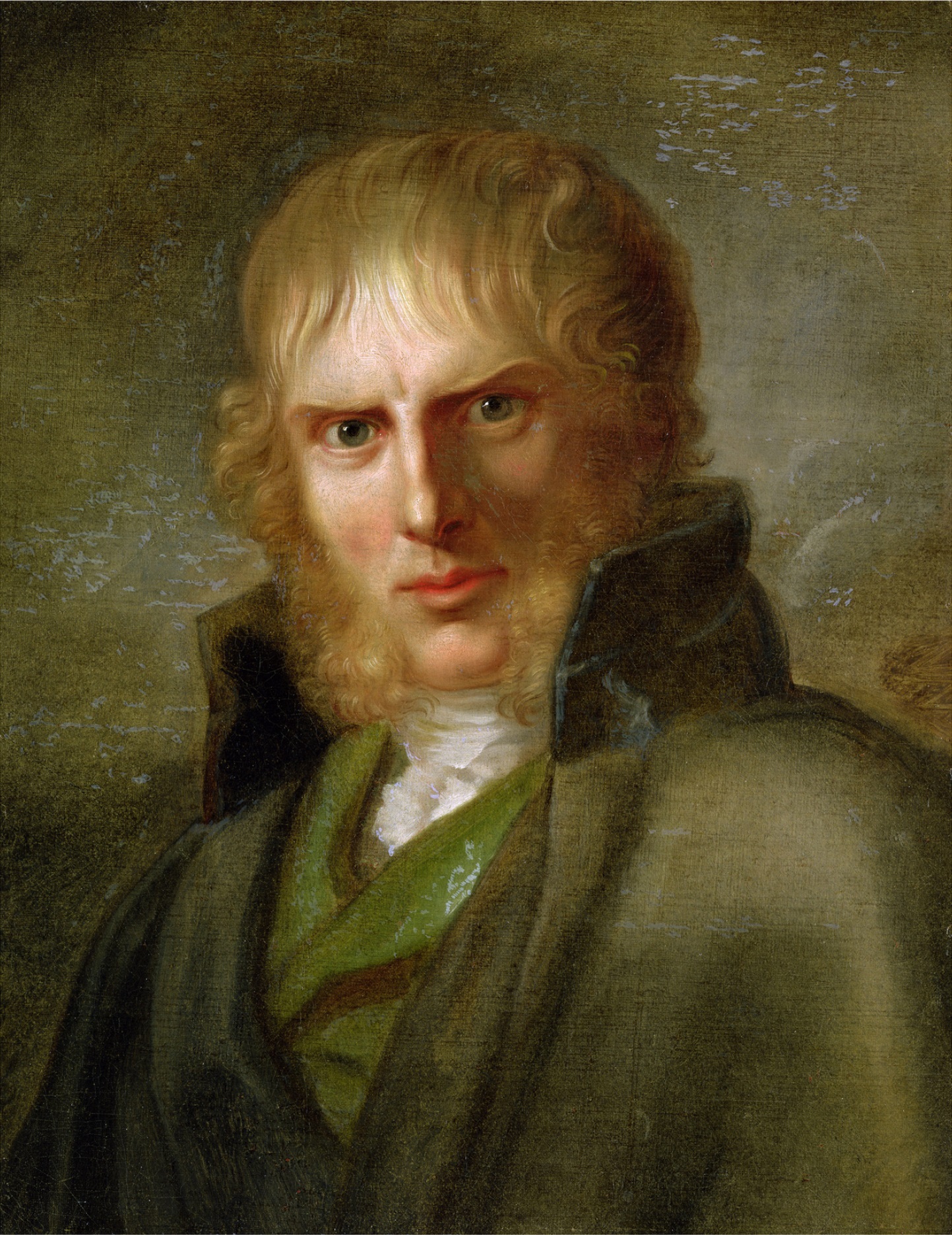
"Cross in the Mountains," by Caspar David Friedrich, 1808:


"Morning in the Great Mountains," by Caspar David Friedrich,1810-11:


Friday, March 30, 2012

The Myth of Self-Conscious Tyranny


Watercolor by William Blake, ca. 1795
"And Caiaphas was in his own mind/A benefactor to mankind."      --William Blake, "The Everlasting Gospel"

When most of us think of Hitler, Stalin or Ahmadinejad, we think of a creature who’s fallen so low that he’s become a separation – or, at best, an aberration- from the human race – someone whom we’re not like and could never possibly become.  Like the superstitious, medieval peasant, we see a beast descended from the demonic line of Cain rather than a fellow human being.

But what do we know of the author of evil himself – of Satan? Wasn’t his name once “Lucifer” (which means “light-bearer”)? Wasn’t he the mightiest, most beautiful and most virtuous of the Almighty God’s angels? Wasn’t he presumably exalted above all the others for his righteousness? Here’s what the Bible says:

Ezekiel 28:17:  “Your heart was proud because of your beauty; you corrupted your wisdom for the sake of your splendor. I cast you to the ground; I exposed you before kings, to feast their eyes on you.”

Isaiah 14:12-15: 
“How you are fallen from heaven,
O Day Star, son of Dawn!
How you are cut down to the ground,
you who laid the nations low!
You said in your heart,
‘I will ascend to heaven;
above the stars of God
I will set my throne on high;
I will sit on the mount of assembly
in the far reaches of the north;
I will ascend above the heights of the clouds;
I will make myself like the Most High.’
But you are brought down to Sheol,
to the far reaches of the pit.”

Evil often begins with the pride that comes from doing what’s right. Although we don’t know what exactly it was that Lucifer did that earned him so exalted a position, it was obviously something very good and deserving of reward. When any of us do evil, it’s often not conscious. It begins with a good purpose - like Hitler’s sincere desire to rescue Germany from inflation and foreign dominance, Stalin’s to usher in an egalitarian order, or Ahmadinejad’s to secure Iran from outside aggression – that becomes prideful. Pride then blinds the individual to their selfishness. As they pursue their  noble goal with increasing self-aggrandizement and wickedness -with an increasing philosophy of the ends justifying the means - they tell themselves that it’s for “the public good,” and that makes it okay. This is critical to understand: most egregiously evil individuals honestly believe that they’re doing what’s right.

John Milton’s classic work Paradise Lost brilliantly captures this truth about the nature of evil. Milton portrays Lucifer’s fall as beginning with pride that leads to righteous indignation against a God whom he begins to believe is a tyrant.

"My sentence is for open War; Of Wiles,
More unexpert, I boast not: them let those
Contrive who need, or when they need, not now.
For while they sit contriving, shall the rest,
Millions that stand in Arms, and longing wait
The Signal to ascend, sit ling'ring here,
Heav'n's fugitives, and for their dwelling place
Accept this dark opprobrious Den of shame,
The Prison of his Tyranny who Reigns
By our delay? no, let us rather choose,
Arm'd with Hell flames and fury all at once
O'er Heaven's high Tow'rs to force resistless way,
Turning our Tortures into horrid Arms
Against the Torturer."

--Satan in Paradise Lost, Bk. II

Although this is extra-scriptural, it seems to me to be an accurate depiction of evil. God is seen as "the Torturer," "the Tyrant," and rebelling against him becomes a good, a noble, a laudable act. This is borne out by scripture: Isn't the essence of Adam and Eve's rebellion that the serpent convinced them that God was selfishly holding them back from their full potential? When Milton describes the angelic rebellion Lucifer leads, he portrays it as a kind of democratic revolution against a perceived dictator. Satan and the demons were, indeed, acting from the most base and selfish motives – but they thought they were in the right. Also along these lines is J.R.R. Tolkien’s tale of the king of Numenor who is so seduced and brainwashed by Sauron (Middle-Earth's Satan figure) that he leads his imperial fleet to Valinor (the land of the gods) to wage ware against the perceived injustices of the gods. 

There is a lesson here for all of us.  Whenever we hear that “Obama wants to destroy the country” or “The Christian Right wants to kill homosexuals” or “Ahmadinejad is a madman,”  we should remind ourselves that, tragically, whatever we think of these people, it's quite likely they believe that they’re doing what’s right – even that God is on their side. That’s what makes evil so insidious. The greatest evils are perpetrated when we believe that we can do no wrong. And that’s why we should cringe when people act like they could never become a Hitler or a Stalin. That attitude is the beginning that led to the infamy those two men obtained. Our attitude should rather be “There but for the grace of God go I.”


(Entire nations, too, can fall victim to the blinding effects of pride. Read this article to see how)

Friday, November 11, 2011

In Praise of Myth

Before God was declared dead in 1882, the European elite had lost their willingness to believe. Nietzsche’s famous statement simply reflected the grave error of thinking that the intelligentsia’s lack of faith had nullified God’s faithfulness. Years before, European academia as a whole, stretched and stressed between rationalism and pantheism for decades, had made the fatal decision to play it safe and discard faith for reason. These Deists, blind to anything but what they could stare at past their own noses, promptly found that the next logical thing to do was to throw out the object of their faith, too.

Yet despite the relentless march of over a century-and-a-half of “progress,” the rocks still haven’t had to cry out (it must be frustrating to be a secular visionary). It seems that faith in something is as fundamentally needed in the human condition - even in its fallen-ness- as breathing. Think about it. It doesn't matter what archaeologists' spades do or don't uncover deep in the English loam. King Arthur held court in Camelot, surrounded by a troop of gallant knights. In the same way, the story of Robin Hood emerging from the shadowy eves of Sherwood Forest to secure justice for the oppressed is every bit as real in our mind's eyes as if he had existed just as the tales say he did. 

Decades of stressing objectivity, empiricism and rationalism in our schools have failed to erase these pictures, these “forms” that lie somewhere in the back of our minds in a place reason can’t reach. In the process of trying to snuff them out and preach only what we can know with absolute certainty, we've reduced history to a jumble of numbers and equations and proofs. Endless pages of quantitative statistics are needed to establish causality – and even then scientists accept that, at best, we can only know “probabilistic” truth. We've bumped up against the same wall through reason for which we through faith out the window.

And here we are, unable to teach Arthur or Robin Hood in history courses; unable to incorporate our highest aspirations and fears – in short, anything resembling a purposeful story – into scholarship. But why? Are these impressions false? Do they pervert our sense of history simply because they can’t be corroborated by a rock some farmer's plow caught upon by chance? Quite obviously, in the search for absolute meaning, it’s a zero-sum game: science has come up just as short as “myth.” I’m not saying legends should be taught as fact, but I am saying that they would not have been believed in the first place unless they contained a grain of truth. More importantly, in their essence they convey more truth than ten thousand pages of quantitative analysis. Arthur embodied for the Welsh the same kind of hope in a temporal redemption that they had in a spiritual one. Robin Hood will always be a lesson of compassion and justice conquering in the face of unjust rulers. In the words of Winston Churchill, "It is all true, or it ought to be." Which is safer? To accept things that we can't know beyond the shadow of a doubt and risk being wrong once in a while, or to acknowledge that we can't know anything?

Thursday, October 20, 2011

The Language of Creation

"Caspar David Friedrich in his Studio,"
Georg Friedrich Kersting, 1819
Christmas Day, 1807. The Count of Thun and his family fought blustery winds on their way to their private chapel at Tetschen castle, Bohemia. This year's religious pageantry was made all the more spectacular by a new addition to the sanctuary. There, in place of the old, ponderous altar-piece stood a newly-finished masterwork. A glinting frame enrounded a painting of Calvary reimagined in an Alpine setting, craggy and crowned by firs. The cross itself stood silhouetted by the brilliant pink hues of a setting sun. This was The Cross on the Mountains, the first major work in what was to be the long and brilliant career of German painter Caspar David Friedrich.

This painting was not just an expression of faith, it was a way for the Thun family to show a cosmopolitan streak. Friedrich’s work was part of a fashionable new movement that was attempting to wash the Enlightenment out of Western Europe. The previous century's overreaching search for rational truth had left the earth a barren wasteland through its insatiable desire to force all knowledge inside of men’s heads. Mysteries and miracles that didn’t conform to formulas had been rejected. For the first time in centuries, Christianity had been publicly attacked. The artists in this new school styled themselves “romantics.” By depicting the inexplicable, the beautiful, and most of all, nature in its glory, they sought to free men from bondage to their minds. Others, chief among them Caspar David Friedrich, painted to remind men that it was not just truth that could be found throughout all of creation, but the truth of the Christian God.

The Cross on the Mountains drew its most vehement criticism, not from Deistic intellectuals, but from a most unlikely source: a fellow Christian. That Christian was the aptly named Basilius von Ramdohr. Unlike Friedrich, von Ramdohr was born and bred among the upper classes of German society. He had acquired a reputation as a conservative lawyer and defender of traditional German values, which led to a career as a cultural critic. With a hint of contempt, no doubt, von Ramdohr went to see Friedrich’s much talked about "romantic" piece when it was on special display. He was deeply unsettled by the painting, so much so, in fact, that he wrote a painstakingly long refutation of the ideas he saw represented in it. He objected that the pine trees had been illustrated to the point of painting each needle. The way the light was rendered was against “all the rules of optics.” And what of landscape paintings themselves? Surely nature itself can contain no explicit meaning and is improper in a church. The rock was rendered poorly, a “most strident contrast to the bright sky, without any transition or harmony.” Perhaps worst of all, in von Ramdohr's opinion, the cross was not located in the center of the painting, and Jesus was not facing the viewer – and surely this would convey the wrong message to worshipers..

With his fledgling reputation at stake, Friedrich was forced to respond. His answer? “Jesus Christ, nailed to the tree, is turned here towards the sinking sun, the image of the eternal, life-giving father. With Jesus’ teachings, an old world dies – that time when God the Father moved directly on the earth. This sun sank and the earth was not able to grasp the departing light any longer. There shines forth in the gold of the evening light the purest, noble metal of the Savior’s figure on the cross, which thus reflects the earth in a softened glow. The cross stands erect on a rock, unshakeably firm like our faith in Jesus Christ. The firs stand around the cross, evergreen, enduring through all ages, like the hopes of man in Him, the crucified.”

Unfortunately, it is very easy for us Christians to make the same mistake von Ramdohr did. In our very desire to keep the Gospel pure, it is tempting to keep our artists in the shadows. We are prone to confusing convention with the Gospel; to thinking that a change in style means a change in substance. Can God only speak through us when we make sure that two pieces of wood are at the exact center of our painting like von Ramdohr wanted? The Bible tells us that God can speak through donkeys, rocks, burning bushes and David’s harp-playing. We forget that though symbols may change, Christ himself can still remain at the center of the work. The greatest stories of salvation are usually told, not through hackneyed altar-calls, but through metaphors. Jesus’ parables are prime examples of this. And what is nature but a majestic metaphor? By depicting Creation in a way that's good and beautiful (Philippians 4:8), we can challenge peoples' deepest beliefs. A God who's evident through the physical world challenges today's naturalists in a way they can't respond to. On the other hand, to deny nature’s revelation of God like von Ramdohr did is to deny what God called “good.” Like the Apostle Paul before his conversion, this man was an intellectual who thought he was advancing the kingdom of God by purging it of false revelation. It turned out that what they were both calling false was God's voice. What place do landscape paintings have in church? Friedrich showed in his response what the psalmist declared long before in chapter 19: "The heavens declare the glory of the Lord; the skies proclaim the work of his hands. Day after day they pour forth speech; night after night they reveal knowledge."

Friday, June 3, 2011

From Burke's "On the Sublime and Beautiful:" the Effects of Tragedy

"IT is thus in real calamities. In imitated distresses the only difference is the pleasure resulting from the effects of imitation; for it is never so perfect, but we can perceive it is imitation, and on that principle are somewhat pleased with it. And indeed in some cases we derive as much or more pleasure from that source than from the thing itself. But then I imagine we shall be much mistaken, if we attribute any considerable part of our satisfaction in tragedy to the consideration that tragedy is a deceit, and its representations no realities. The nearer it approaches the reality, and the farther it removes us from all idea of fiction, the more perfect is its power. But be its power of what kind it will, it never approaches to what it represents. Choose a day on which to represent the most sublime and affecting tragedy we have; appoint the most favourite actors; spare no cost upon the scenes and decorations, unite the greatest efforts of poetry, painting, and music; and when you have collected your audience, just at the moment when their minds are erect with expectation, let it be reported that a state criminal of high rank is on the point of being executed in the adjoining square; in a moment the emptiness of the theatre would demonstrate the comparative weakness of the imitative arts, and proclaim the triumph of the real sympathy. I believe that this notion of our having a simple pain in the reality, yet a delight in the representation, arises from hence, that we do not sufficiently distinguish what we would by no means choose to do, from what we should be eager enough to see if it was once done. The delight in seeing things, which, so far from doing, our heartiest wishes would be to see redressed. This noble capital, the pride of England and of Europe, I believe no man is so strangely wicked as to desire to see destroyed by a conflagration or an earthquake, though he should be removed himself to the greatest distance from the danger. But suppose such a fatal accident to have happened, what numbers from all parts would crowd to behold the ruins, and amongst many who would have been content never to have seen London in its glory! Nor is it, either in real or fictitious distresses, our immunity from them which produces our delight; in my own mind I can discover nothing like it. I apprehend that this mistake is owing to a sort of sophism, by which we are frequently imposed upon; it arises from our not distinguishing between what is indeed a necessary condition to our doing or suffering anything in general, and what is the cause of some particular act. If a man kills me with a sword, it is a necessary condition to this that we should have been both of us alive before the fact; and yet it would be absurd to say, that our being both living creatures was the cause of his crime and of my death. So it is certain, that it is absolutely necessary my life should be out of any imminent hazard, before I can take a delight in the sufferings of others, real or imaginary, or indeed in anything else from any cause whatsoever. But then it is a sophism to argue from thence, that this immunity is the cause of my delight either on these or on any occasions. No one can distinguish such a cause of satisfaction in his own mind, I believe; nay, when we do not suffer any very acute pain, nor are exposed to any imminent danger of our lives, we can feel for others, whilst we suffer ourselves; and often then most when we are softened by affliction; we see with pity even distresses which we would accept in the place of our own."

Tuesday, May 31, 2011

Florence: the Architecture of a Renaissance

To live in Florence in the mid-fifteenth century was to be at the center of the world and the crossroads –or as it seemed to its inhabitants, the fount- of civilization. The narrow, medieval streets had given way to stately lanes wide enough to accommodate bustling cavalcades of merchants and tradesmen. All along the streets stretched shops upon shops. Rising above these were palazzos flanked by high gates, geometric gardens and statuary. This was the reign of Lorenzo de Medici, or “Lorenzo the Magnificent” as he quietly encouraged himself to be known. The Medici were a medieval success story. Over several generations, they had pulled themselves from obscurity to become the bankers to many noble families in Italy. They had even earned the distinction of protecting the Papacy's enormous assets. Since the turn of the fifteenth century, a combination of trade, usury and philanthropy under the Medicis' direction had transformed Florence into the "Athens of the Middle Ages" and the home and patron of Europe's master artisans.

The city was anything but peaceful, and its wealth made it a tempting prize to other city states. The busy streets were not seldom the site of riots, workers' strikes, and lynchings by families jealous of the Medici's power. In the midst of this tumult, Florentines learned that it is neither peace nor security that guarantees prosperity. Like Athens millenia before, the city-state of Florence was the birthplace of a renaissance (in this case, the Renaissance) because of the competitive spirit of its people and rulers. The ingredients were all there. As early as the 13th century, the guilds had secured fair competition through the "Ordinances of Justice." Florence was also the home to Europe's soundest currency since antiquity: the "florin." This foundation of lawful commerce paved the way for an explosion of enterprise. Much to the consternation of the common people of the city, immigrants (the "gente nuovo") poured in, pushing costs of labor down and production sky high.

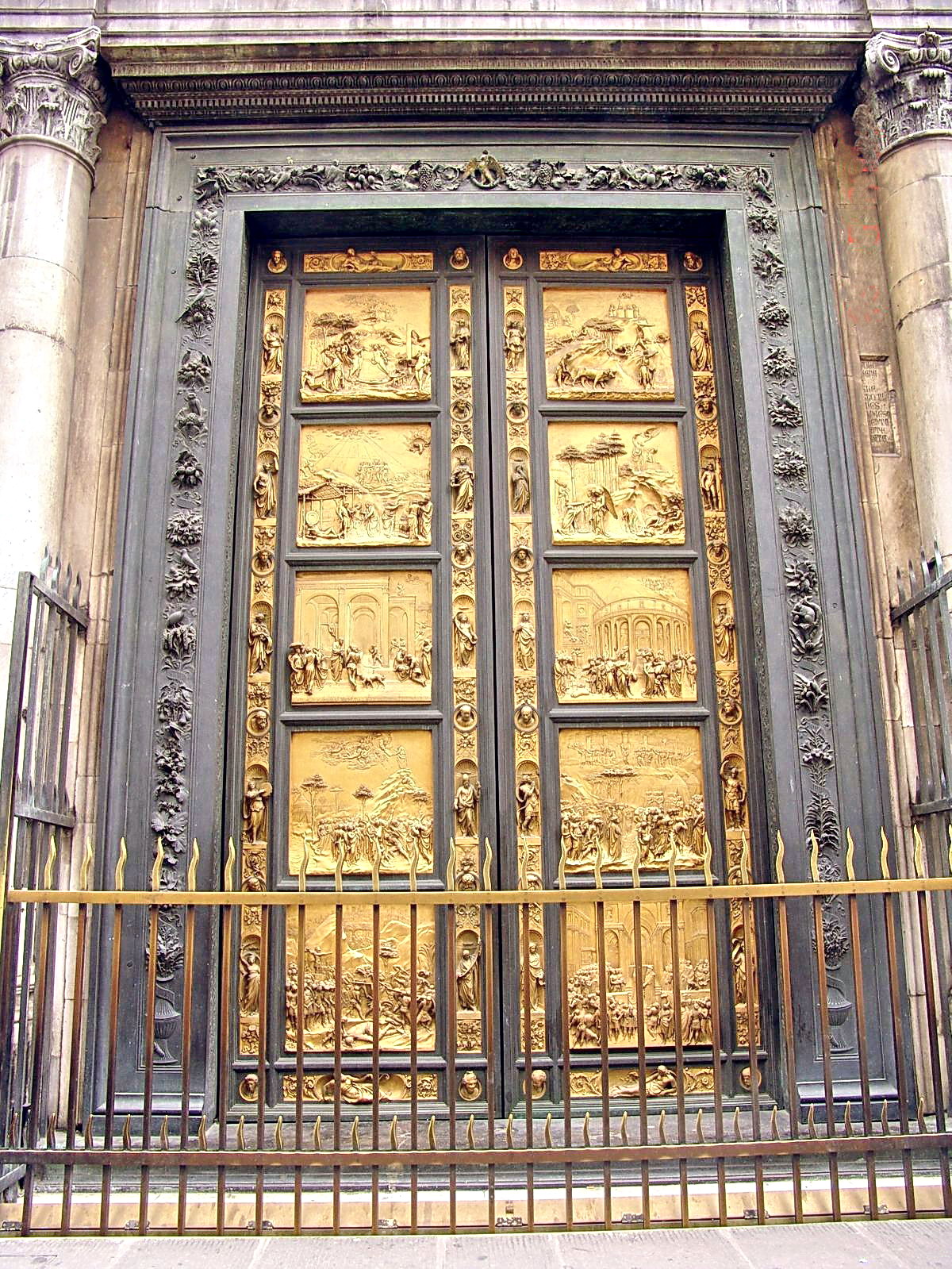
This race for employment shows only one facet of how deeply ingrained competition was in the Florentine psyche. The master sculptor Lorenzo Ghiberti was chosen from among many contest entrants to build the "Gates of Paradise" for the Battistero of San Giovanni. Brunelleschi's spectacular dome -the greatest architectural feat in a millenium- that sits atop Florence Cathedral was likewise a prize-winning design. In fact, the masterpieces of Florence's Leonardo da Vinci, Michelangelo and Sandro Botticelli all emerged from the dust of this struggle to win contracts from noble families and the Papacy. This was an era before reckless self-expression hampered the creative genius of artists, and art's inspiration was found in the tastes and culture of its audience. "Primavera," "Mona Lisa," the ceiling of the Sistine Chapel, and countless other masterpieces, all stand as testimonies, not only of timeless beauty and vision, but of how "infinite in faculty" the human genius can be when allowed to enjoy the fruits of its labor.

Friday, May 27, 2011

From The Confessions of St. Augustine, Book II: Sin a Counterfeit of God

 "For so doth pride imitate exaltedness; whereas Thou alone art God exalted over all. Ambition, what seeks it, but honours and glory? whereas Thou alone art to be honoured above all, and glorious for evermore. The cruelty of the great would fain be feared; but who is to be feared but God alone, out of whose power what can be wrested or withdrawn? when, or where, or whither, or by whom? The tendernesses of the wanton would fain be counted love: yet is nothing more tender than Thy charity; nor is aught loved more healthfully than that Thy truth, bright and beautiful above all. Curiosity makes semblance of a desire of knowledge; whereas Thou supremely knowest all. Yea, ignorance and foolishness itself is cloaked under the name of simplicity and uninjuriousness; because nothing is found more single than Thee: and what less injurious, since they are his own works which injure the sinner? Yea, sloth would fain be at rest; but what stable rest besides the Lord? Luxury affects to be called plenty and abundance; but Thou art the fulness and never-failing plenteousness of incorruptible pleasures. Prodigality presents a shadow of liberality: but Thou art the most overflowing Giver of all good. Covetousness would possess many things; and Thou possessest all things. Envy disputes for excellency: what more excellent than Thou? Anger seeks revenge: who revenges more justly than Thou? Fear startles at things unwonted and sudden, which endangers things beloved, and takes forethought for their safety; but to Thee what unwonted or sudden, or who separateth from Thee what Thou lovest? Or where but with Thee is unshaken safety? Grief pines away for things lost, the delight of its desires; because it would have nothing taken from it, as nothing can from Thee.

"Thus doth the soul commit fornication, when she turns from Thee, seeking without Thee, what she findeth not pure and untainted, till she returns to Thee. Thus all pervertedly imitate Thee, who remove far from Thee, and lift themselves up against Thee. But even by thus imitating Thee, they imply Thee to be the Creator of all nature; whence there is no place whither altogether to retire from Thee. What then did I love in that theft? and wherein did I even corruptly and pervertedly imitate my Lord? Did I wish even by stealth to do contrary to Thy law, because by power I could not, so that being a prisoner, I might mimic a maimed liberty by doing with impunity things unpermitted me, a darkened likeness of Thy Omnipotency? Behold, Thy servant, fleeing from his Lord, and obtaining a shadow. O rottenness, O monstrousness of life, and depth of death! could I like what I might not, only because I might not? For so doth pride imitate exaltedness; whereas Thou alone art God exalted over all. Ambition, what seeks it, but honours and glory? whereas Thou alone art to be honoured above all, and glorious for evermore. The cruelty of the great would fain be feared; but who is to be feared but God alone, out of whose power what can be wrested or withdrawn? when, or where, or whither, or by whom? The tendernesses of the wanton would fain be counted love: yet is nothing more tender than Thy charity; nor is aught loved more healthfully than that Thy truth, bright and beautiful above all. Curiosity makes semblance of a desire of knowledge; whereas Thou supremely knowest all. Yea, ignorance and foolishness itself is cloaked under the name of simplicity and uninjuriousness; because nothing is found more single than Thee: and what less injurious, since they are his own works which injure the sinner? Yea, sloth would fain be at rest; but what stable rest besides the Lord? Luxury affects to be called plenty and abundance; but Thou art the fulness and never-failing plenteousness of incorruptible pleasures. Prodigality presents a shadow of liberality: but Thou art the most overflowing Giver of all good. Covetousness would possess many things; and Thou possessest all things. Envy disputes for excellency: what more excellent than Thou? Anger seeks revenge: who revenges more justly than Thou? Fear startles at things unwonted and sudden, which endangers things beloved, and takes forethought for their safety; but to Thee what unwonted or sudden, or who separateth from Thee what Thou lovest? Or where but with Thee is unshaken safety? Grief pines away for things lost, the delight of its desires; because it would have nothing taken from it, as nothing can from Thee."   

Saturday, April 23, 2011

The Dream of the Rood


Apart from reading the wonderfully harmonious Gospel accounts of the crucifixion, one of my favorite Easter traditions is reading the Anglo-Saxon poem, "The Dream of the Rood." ("rood" means "crucifix" in Old English) Not only are these verses the first, full Christian poem in the English language, they comprise what may be one of our earliest of all English poems. Historians theorize that the poem may have been penned by Caedmon, whom the Venerable Bede tells us was a plain, uninspired herdsman until taught in the course of a dream to write hymns to God. The poem's enduring quality apparently caught on among the churchmen of Northumbria. Parts of it were inscribed on an equally masterful work of art, the Ruthwell Cross. Side-by-side with such engravings as Mary Magdalene washing Christ's feet with her hair, the healing of the man born blind, and the flight from Egypt, the poem -through the eyes of the cross upon which Jesus died- captures the paradoxical nature of Christ at once submitting to, and yet conquering, death.
.

1 Lo! I will tell of the best of dreams,
   what I dreamed in the middle of the night,
   after the speech-bearers were in bed.
   It seemed to me that I saw a very wondrous tree
5 lifted into the air, enveloped by light,
   the brightest of trees. That beacon was all
   covered with gold. Gems stood
   beautiful at the surface of the earth, there were five also
   up on the central joint of the cross. All those fair through eternal decree gazed
10 [on] the angel of the Lord. [It] was certainly not a wicked person’s gallows there,
   but holy spirits, men over the earth,
   and all this famous creation gazed on him.
  Wondrous was that tree of victory, and I stained with sins
  wounded sorely with defects, I saw the tree of glory,
15 honoured with garments, shining joyously,
  adorned with gold....

(Read the remainder of the poem here)

Monday, March 28, 2011

Romanticism and Christianity

When we think of movements in art or culture, its tempting to fixate on where they lead, not where they begin. Consider the Enlightenment. Instead of seeing it as a rejection of abject superstition and ignorance in favor of a view of an ordered world created by an ordered God, we see it as humanism or a megalomaniacal IQ exercise by old, dead, white men. But what are the facts? The Enlightenment began with the Protestant rediscovery of the Bible through which God could speak to people individually. It was confirmed in the discoveries of rational scientific laws by the Christian scientists Newton, Kepler and Copernicus. The same is true with Romanticism. The utopian communities and Transcendentalism we associate with the movement don't do it justice; actually, they distort the truth. To judge a thing by where it leads in its extremes is a fallacy by which we would have to condemn the idea of “civilization” since it always ends in ruins, or “life” since it ends in death.

By the late 18th century, the Enlightenment had digressed into absolute faith in man's ability to discern truth for himself, attacks on Christianity, and degradation of nature into a machine for man's exploitation. Romanticism began by simply voicing opposition to each of these points. According to distinguished historian Isaiah Berlin's The Roots of Romanticism, the earliest person to have done so in a “Romantic” way was the German philosopher Johann Georg Hamann. Hamann had received a broad education before his life began to fall apart in the pursuit of pleasure. Then, upon discovering the Bible, he was transformed and aligned himself with the Lutheran Pietists. A tireless writer, Hamann earned his nickname “Magus of the North” by churning out treatises in response to the dangerous theories of his Enlightenment friends who placed human Reason on a pedestal. He wrote to one of his closest friends, Immanuel Kant, “Reason is not given to you in order that you might become wise, but that you may know your folly and ignorance; as the Mosaic law was not given to the Jews to make them righteous, but to make their sins more sinful to them.” To reinforce this point, Hamann insisted that faith in God alone could lead one to a knowledge of the truth through his Holy Spirit. He deliberately styled himself after Socrates, the man whose greatest strength was his insistence that he knew nothing.

Unlike the other philosophers in his circle, Hamann never held a post at a university, but he did attract an enthusiastic following. One of his students was another Lutheran: a scholar and a priest, named Johann Gottfried Herder. Together, Herder and Hamann's ideas inspired a new genre of German art called Sturm und Drang. In its eschewing of rationality as the basis of truth, this style of music, plays and books profoundly influenced Goethe and all later Romanticists, including the master painter Caspar David Friedrich and his profoundly Christian artwork. Meanwhile, the Christian elements of this message had reached France, where the nobleman Francois Rene de Chateaubriand was hard at work writing what would become one of the brightest ornaments of the Romantic movement: The Genius of Christianity. This book argued that "Christianity comes from God, because it is excellent,” and defended it from its Enlightenment critics by arguing that the very beauty of the Christian religion was a proof that it was true. Chateaubriand's thesis was a tremendous influence on Lord Byron and other Romantics, but they unfortunately dropped the author's orthodoxy in favor of his aesthetic finesse. This was increasingly true of the Romantic movement as the 1800s wore on. Like the Enlightenment before it, the movement that had started as a Christian reaction to error branched out farther and farther from its original purpose and looked for truth somewhere other than in God. For the Romantics, this door to understanding became the senses instead of the mind, as it had been for the Rationalists. But let's not forget how it began. Rather than lamenting where movements in the arts, philosophy and culture may go in the end, Christians should be inspired that they have, and can still, frame the discussion from the beginning.

Wednesday, March 2, 2011

The Story of the Parthenon

Built in 15 years (447-432 B.C.) at the height of the Athenian golden age under Pericles, the Parthenon was the fruit of Greece’s finest craftsmen. Its symmetry, harmony with its surroundings, and gracefully commanding air testify to the faith the Greeks had in human perfectibility. At 469 silver talents, the building was costly enough, but if it drained the Athenian purse, it bankrupted their moral purity. The funds had been illegally seized from the treasury of the Delian League, a confederation of Greek states allied to take the offensive against the Persians who had been pushed out of Greece in 479 B.C. This money had been intended for defending member states against the enemy. The Athenian demagogue Pericles, however, was more concerned at the moment with flattering his fellow citizens. His city had recently come under a firestorm of criticism for its growing abuse of power as head city in the League. Athenians needed reassurance of their leading role. Mumbling something about the silver not being “theirs that give it, but theirs that receive it, if… they perform the conditions upon which they receive it.”, Pericles lavished the money on the beautification of Athens in a move of vain defiance that shocked the classical world. Part of this project included setting aside 469 talents for a monument to grace the Acropolis -the Parthenon. This symbol, ostensibly to honor Athena Parthenos, was in reality an in-your-face display of Athenian pride and supremacy.

Athens paid a horrible price for going to such lengths to assert its vanishing reputation and appease its citizens.  Two years after the Parthenon’s completion, Pericles and 1/3 of the Athenian populace died during a plague as the Greek world rent itself in two. This was the beginning of the Peloponnesian War -a war caused by Sparta’s indignation at Athens’ growing wealth and usurpation of power. Athens would never regain the glorious position it had held for so brief a time, but it did leave us a monument whose story became complete 2117 years later: In 1689 Venetian warships bombarded the temple (now an ammunition dump for Turkish cannons), sculpting it more decisively than any chisel ever could have into the symbol of ancient Greece that we know today. It’s a symbol not only of the consummate skill of the ancient Athenians, but of their excessive egotism. When men try to make a lasting name for themselves, they're faced with a dilemma. A symbol grand enough to overshadow their neighbors and startle their foes requires more skill and more resources than is native to anyone. They find that to create such an edifice they must betray their own laws, their own consciences, and exploit their fellow men. This is a theme common to many of the monuments we're familiar with. The Pyramids, the Great Wall of China, Solomon's Temple, and the Coliseum all became showcases for their patrons; all were built by slave labor. These monuments' stories were similar to the Parthenon's, whose friezes and sculptures had been bought with stolen money. While these exorbitant ornaments may have depicted Athena, in reality they were meant to honor their own craftsmen.

“My name is Ozymandias, king of kings:

Look on my works, ye Mighty, and despair!’

Nothing besides remains. Round the decay

Of that colossal wreck, boundless and bare

The lone and level sands stretch far away.”

~Ozymandias, Percy Bysshe Shelley

Monday, February 28, 2011

When, Where and Why Justice Became Blind

"The Fountain of Justice,"
Hans Gieng, A.D. 1543
The concept of "justice" hasn't always been pictured or portrayed in the way that we Westerners have grown so used to. As early as the 3rd millenium B.C., the ancient Egyptians chose a goddess, Maat, to be the symbol of truth and justice. Maat was usually painted wearing an ostrich feather in her hair, embodying immutable, eternal truth (when the wind was clement, at least). The Greeks later beautified this idea, dispensed with the feather in favor of scales, and gave this goddess the name Dike (In a typical insight into human nature, the Greeks told how Zeus had placed Dike on earth, to enforce justice among mortals. When she at last despaired of her lot being utterly impossible, he hastened her away to Mt. Olympus). The Romans didn't so much re-imagine this idea as they did deftly and elegantly rename it: Justitia. This goddess had many of Dike's attributes (the flowing, white robe, noble visage and scales) but, in keeping with the Roman character, it wasn't the idea of justice alone that was important, but how it could be enforced. To that end, Justitia was commonly depicted brandishing a double-edged sword, with which she could quickly attack either party in a suit. At this stage of development, Justice was now recognizable even to our modern eyes, but she was still lacking a vital detail.

It wasn't until the sculptor Hans Gieng graced Bern, Switzerland with his "Fountain of Justice" in A.D. 1543 that the ancient symbol found herself subtly, yet fundamentally, transformed by the addition of a blindfold. The time, place and reason for this was no coincidence. It reflected a new depth of understanding and passion for justice that was a direct result of Bern's religious, and therefore cultural, revival. Nineteen years earlier, the city had become one of the first four of the Swiss cantons to formally cease burning the works and followers of theologian Ulrich Zwingli. Central to Zwingli's message was the necessity of everyone's understanding of, and accountability to, the Word of God. One of his prayers began "...open and enlighten our hearts, that we may understand purely and clearly thy words: may they transform us according to this exact understanding, that we may never be displeasing to thy divine majesty, through Jesus Christ, our Lord." Since a large portion of the Bible is law, a revival in understanding of God (the author of law) by both Protestants and Counter-Reformation Catholics, infused Europe with a new appreciation for law. It was around this time that theologians Hugo Grotius, Alberico Gentili and Francisco de Vitoria wrote their seminal volumes on international law. Switzerland of Zwingli and Calvin's era was especially centered around the Bible and its reverence for a God who "is no respecter of persons" (Acts 10:34); who alone can grant impartial justice to all men, whether priests, kings, or laymen. Upon closer examination of Gieng's statue, one can see four smaller busts carved symbolically underneath the foot of Justice. These represent a pope, a sultan, an emperor and a schultheiss, all alike under the even judgment of justice, blind at last.