Showing posts with label Architecture. Show all posts

Tuesday, May 31, 2011

Florence: the Architecture of a Renaissance

To live in Florence in the mid-fifteenth century was to be at the center of the world and the crossroads –or as it seemed to its inhabitants, the fount- of civilization. The narrow, medieval streets had given way to stately lanes wide enough to accommodate bustling cavalcades of merchants and tradesmen. All along the streets stretched shops upon shops. Rising above these were palazzos flanked by high gates, geometric gardens and statuary. This was the reign of Lorenzo de Medici, or “Lorenzo the Magnificent” as he quietly encouraged himself to be known. The Medici were a medieval success story. Over several generations, they had pulled themselves from obscurity to become the bankers to many noble families in Italy. They had even earned the distinction of protecting the Papacy's enormous assets. Since the turn of the fifteenth century, a combination of trade, usury and philanthropy under the Medicis' direction had transformed Florence into the "Athens of the Middle Ages" and the home and patron of Europe's master artisans.

The city was anything but peaceful, and its wealth made it a tempting prize to other city states. The busy streets were not seldom the site of riots, workers' strikes, and lynchings by families jealous of the Medici's power. In the midst of this tumult, Florentines learned that it is neither peace nor security that guarantees prosperity. Like Athens millenia before, the city-state of Florence was the birthplace of a renaissance (in this case, the Renaissance) because of the competitive spirit of its people and rulers. The ingredients were all there. As early as the 13th century, the guilds had secured fair competition through the "Ordinances of Justice." Florence was also the home to Europe's soundest currency since antiquity: the "florin." This foundation of lawful commerce paved the way for an explosion of enterprise. Much to the consternation of the common people of the city, immigrants (the "gente nuovo") poured in, pushing costs of labor down and production sky high.

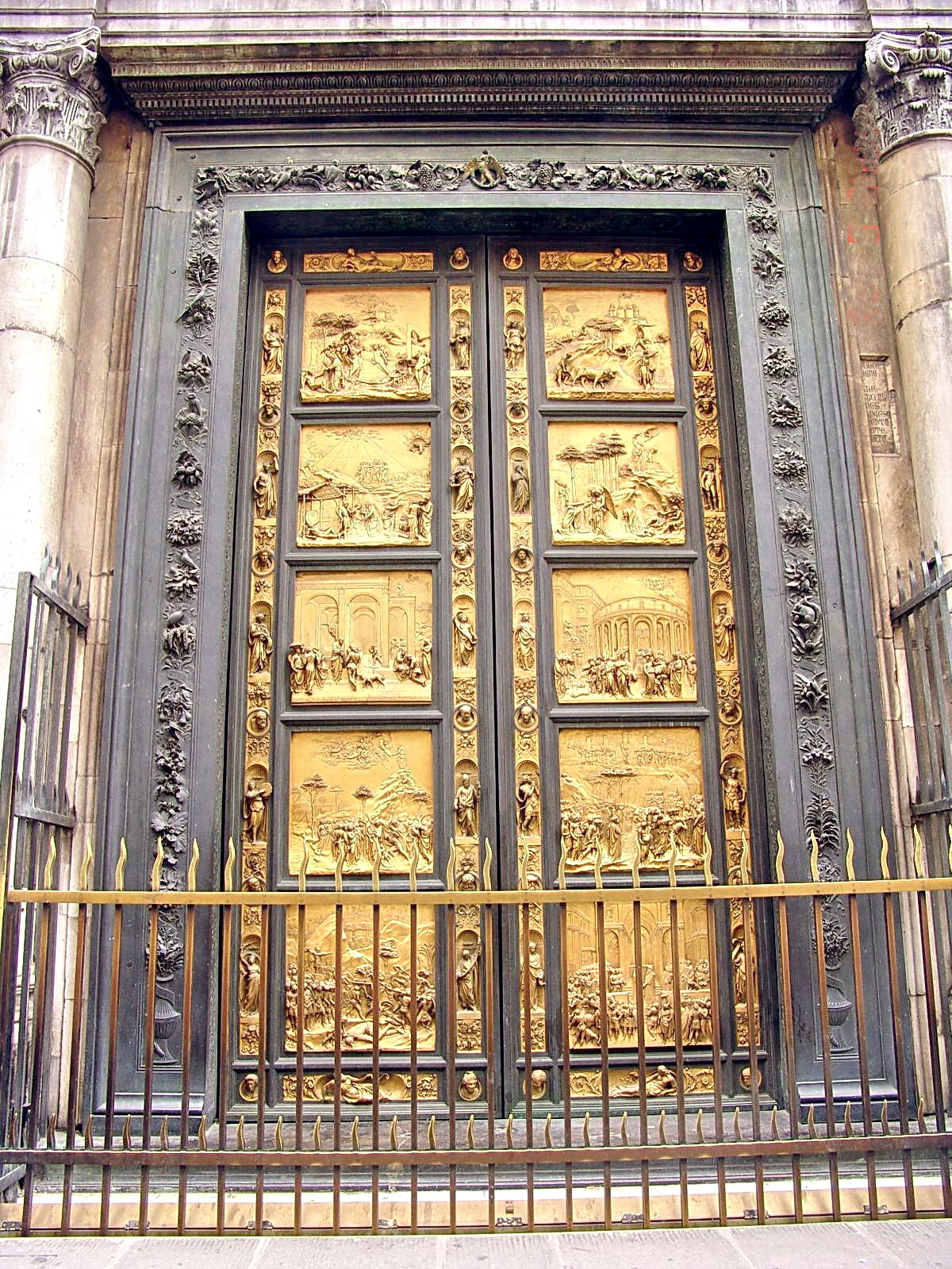
This race for employment shows only one facet of how deeply ingrained competition was in the Florentine psyche. The master sculptor Lorenzo Ghiberti was chosen from among many contest entrants to build the "Gates of Paradise" for the Battistero of San Giovanni. Brunelleschi's spectacular dome -the greatest architectural feat in a millenium- that sits atop Florence Cathedral was likewise a prize-winning design. In fact, the masterpieces of Florence's Leonardo da Vinci, Michelangelo and Sandro Botticelli all emerged from the dust of this struggle to win contracts from noble families and the Papacy. This was an era before reckless self-expression hampered the creative genius of artists, and art's inspiration was found in the tastes and culture of its audience. "Primavera," "Mona Lisa," the ceiling of the Sistine Chapel, and countless other masterpieces, all stand as testimonies, not only of timeless beauty and vision, but of how "infinite in faculty" the human genius can be when allowed to enjoy the fruits of its labor.

Wednesday, March 2, 2011

The Story of the Parthenon

Built in 15 years (447-432 B.C.) at the height of the Athenian golden age under Pericles, the Parthenon was the fruit of Greece’s finest craftsmen. Its symmetry, harmony with its surroundings, and gracefully commanding air testify to the faith the Greeks had in human perfectibility. At 469 silver talents, the building was costly enough, but if it drained the Athenian purse, it bankrupted their moral purity. The funds had been illegally seized from the treasury of the Delian League, a confederation of Greek states allied to take the offensive against the Persians who had been pushed out of Greece in 479 B.C. This money had been intended for defending member states against the enemy. The Athenian demagogue Pericles, however, was more concerned at the moment with flattering his fellow citizens. His city had recently come under a firestorm of criticism for its growing abuse of power as head city in the League. Athenians needed reassurance of their leading role. Mumbling something about the silver not being “theirs that give it, but theirs that receive it, if… they perform the conditions upon which they receive it.”, Pericles lavished the money on the beautification of Athens in a move of vain defiance that shocked the classical world. Part of this project included setting aside 469 talents for a monument to grace the Acropolis -the Parthenon. This symbol, ostensibly to honor Athena Parthenos, was in reality an in-your-face display of Athenian pride and supremacy.

Athens paid a horrible price for going to such lengths to assert its vanishing reputation and appease its citizens.  Two years after the Parthenon’s completion, Pericles and 1/3 of the Athenian populace died during a plague as the Greek world rent itself in two. This was the beginning of the Peloponnesian War -a war caused by Sparta’s indignation at Athens’ growing wealth and usurpation of power. Athens would never regain the glorious position it had held for so brief a time, but it did leave us a monument whose story became complete 2117 years later: In 1689 Venetian warships bombarded the temple (now an ammunition dump for Turkish cannons), sculpting it more decisively than any chisel ever could have into the symbol of ancient Greece that we know today. It’s a symbol not only of the consummate skill of the ancient Athenians, but of their excessive egotism. When men try to make a lasting name for themselves, they're faced with a dilemma. A symbol grand enough to overshadow their neighbors and startle their foes requires more skill and more resources than is native to anyone. They find that to create such an edifice they must betray their own laws, their own consciences, and exploit their fellow men. This is a theme common to many of the monuments we're familiar with. The Pyramids, the Great Wall of China, Solomon's Temple, and the Coliseum all became showcases for their patrons; all were built by slave labor. These monuments' stories were similar to the Parthenon's, whose friezes and sculptures had been bought with stolen money. While these exorbitant ornaments may have depicted Athena, in reality they were meant to honor their own craftsmen.

“My name is Ozymandias, king of kings:

Look on my works, ye Mighty, and despair!’

Nothing besides remains. Round the decay

Of that colossal wreck, boundless and bare

The lone and level sands stretch far away.”

~Ozymandias, Percy Bysshe Shelley